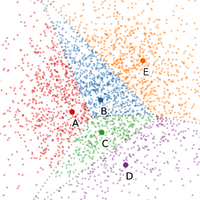
Let me just drop this here for now.
contextuality and voting paradox
So... I recently started using AI to make some ideas concrete and formalize them in math and then in Lean. This turned out to work very well.
I share this here, as a work in progress, mostly for two reasons:
There are already some results worth looking at, but they still need a lot of work before becoming publishable. I could appreciate some help with it. Having an AI do the Lean part is easy to do and easy to check. In particular formalizing existing results in Lean is worthwhile even independent of my project.Interesting things to look at (keep in mind that this is all still very new and work in progress and not all of it proven or even formalized in Lean yet):
Equality of voters and candidatesThe equality criterion (proposed by equal vote) is incompatible with clone independence in the case of ties, for three or more candidates. A method only passes when giving each candidate (not just the tied ones) equal probability in the random tie break. But then adding clones gives more probability mass to the group of clones.
However both are compatible when stating it with an explicit exception in the case of ties. This gives the new criterion of equality of voters and candidates, where the above only has equality of voters.
By definition, it excludes every method that fails clone independence, so Borda and STAR are not covered. Score and Maximal Lotteries need careful tie breaker to pass.
The theoretically beautiful about this is that it locates the voting paradox in one specific case where it can be fixed with a forced exception and the exception itself is fair.
A deterministic method gives a discrete result, like 0 and 1. But there is always a boundary where one turns to the other. And this boundary is undecidable without breaking the symmetry. So it needs an exception.
Information theoretic comparison of voting methodsI'm still quite clear on how far this idea goes but so far it looks promising.
The simple idea was that voting methods are limited in how they make use of the possible information. And this happens in two stages: on the ballot and in the count, by strategy.
The first stage is easy. Score can carry more information than approval, otherwise equal. Approval can carry more information than plurality.
Now from the equality criterion we know that voting methods can be biased. E.g. plurality fails as a vote for A in a three candidate race would need a vote for B and C to cancel it. This causes it to not make optimal use of the information, like a methodical error in an experiment.
The way to make this exact is an information theoretic measure that can be calculated for each method under the strategic assumption of optimal response.
Say in an election the candidates A and B are the front runners with some more candidates behind. Then a strategic voter will want to vote for the one of the two they prefer. But approval differs from plurality here in that it allow to approve also all candidates one likes better to the preferred front runner. So while the vote mainly concerns the match between two candidate, it affects the votes for others too. With approval it is always save to vote this way. This has the effect that each such comparison is able to switch to the pairwise winner. And under iteration this then leads to the Condorcet winner. For plurality however, it can happen that it gets stuck on a bad pair, locking in the plurality winner.
The result is that under strategic play, each possible plurality vote is included in each possible approval vote. Which means, voters are never worse of when using approval strategically. So approval is better than plurality in every possible scenario.
A similar argument can then be extended to other voting methods, comparing similar to similar methods then allow to build a network comparing them this way.
Unification of voting paradoxes by contextualityThis is the actual hearth of the project and it's where the deepest and most beautiful math sits.
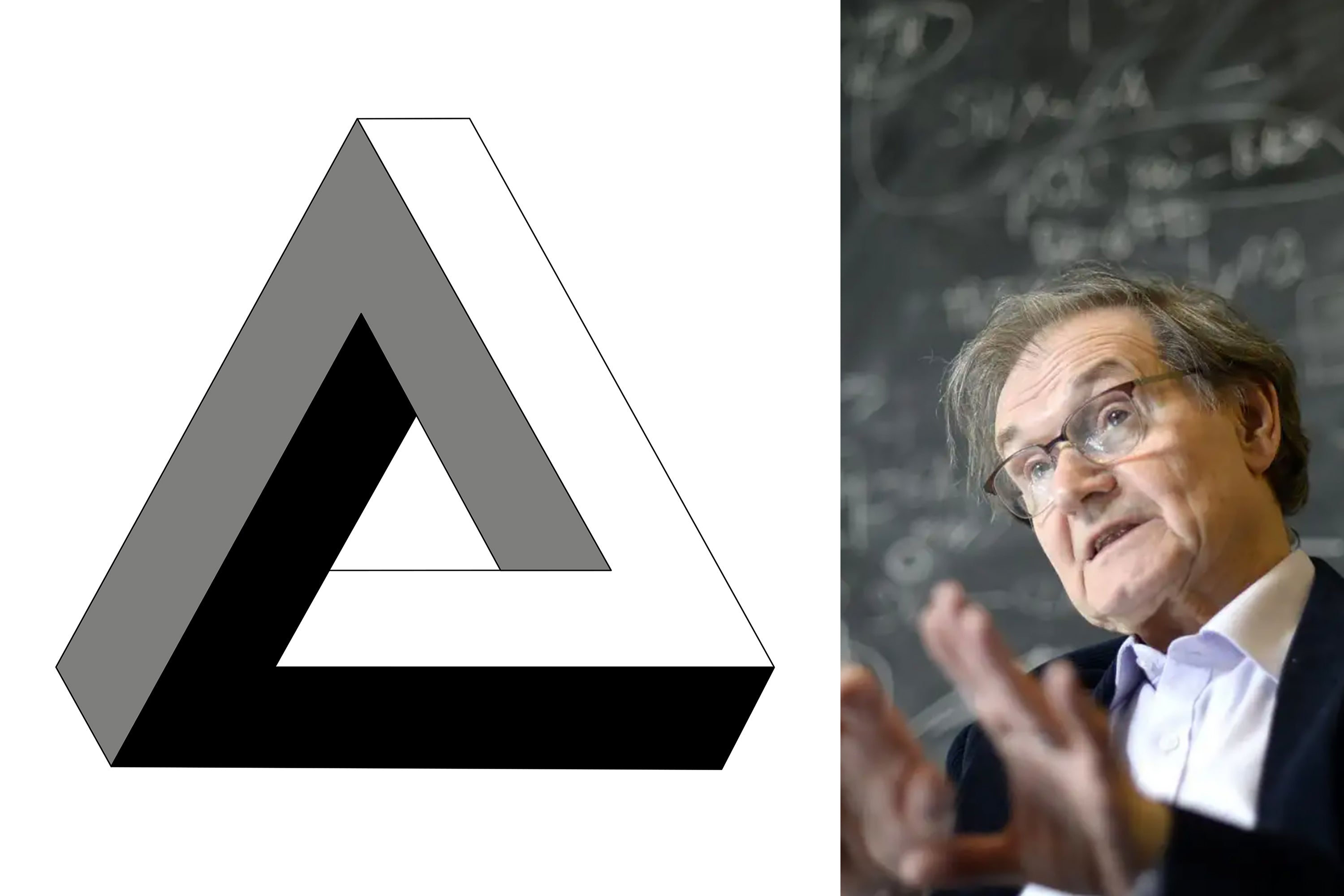
Have a look at the penrose triangle. When you hide any of the corners, the picture looks like it could make sense. When you look at all of them together it turns out to be impossible.
Now Condorcet cycles are just like this, and the math of contextuality can make this precise. It describes situations where local data can be patched together and ageing locally, while this may fail globally.
Now recall the consistency criterion. It requires that if there are two electorates with A winning in both, then combining them will still have A win. But that's pretty much the requirement from above, to have a global result that agrees with the local results. So it is incompatible with the Condorcet criterion.
Most (possibly all) voting paradoxes are like this. Requiring that the result is fixed when adding an irrelevant candidate is combining two contexts. Participation requires that adding a voter will not make the result worse for that voter, i.e. that it stays the same or better. And so on.
So we can't get rid of the paradox, but we can choose where to place it. And this choice leads to a classification of paradoxes by where they are located and one meta category that concerns the incompatibility of different placements.
AnywaySo far for now. Have a look, but keep in mind that the notes change fast as it progresses and that definitions may change along the way.
Again: Any help, review and opinion is appreciated (as long as it says on topic, see the roadmap).